L O A D I N G

Shopping Cart

No products in the cart.

Pioneers play a major role in the history of The Church of Jesus Christ of Latter-Day Saints. The Salt Lake Valley was settled by LDS pioneers in the mid-19th century, and since then, members of the church have proudly looked back on their pioneer heritage.

Although it’s not common in LDS culture, pioneer costumes are still worn for a few select occasions, such as reenactments of pioneer treks or theatrical performances. If you have questions about how pioneers dressed or how you can dress like a pioneer, keep reading.

Historical Context of LDS Pioneers

LDS pioneers traveled across the country after receiving religious persecution throughout states like Ohio and Missouri. Led by their prophet, Brigham Young, members of The Church of Jesus Christ of Latter-Day Saints resolved to travel west to find a place where they could settle and practice their faith according to their desires.

Naturally, the American West was an untamed prairie at the time, so their clothing had to accommodate the harsh conditions. Function had to take precedence over fashion. Additionally, modesty has always been encouraged in LDS culture, as it is a reflection of the reverence one has for their God-given body.

Materials and Construction of Pioneer Clothing

The most common material to make women’s pioneer apparel was calico. This was an inexpensive and washable cotton fabric. Different layers of pioneer clothing often consisted of different fabrics, though. A linen petticoat was also worn, along with an apron that was also made of calico.

Pioneer men typically wore sturdy clothing made of cotton or linen. They usually wore loose trousers and full shirts that were made to endure a hard day of manual labor. Straw hats were also common to protect them from the sun.

Other common fabrics and materials for pioneer clothing were denim, wool, cotton, or flannel.
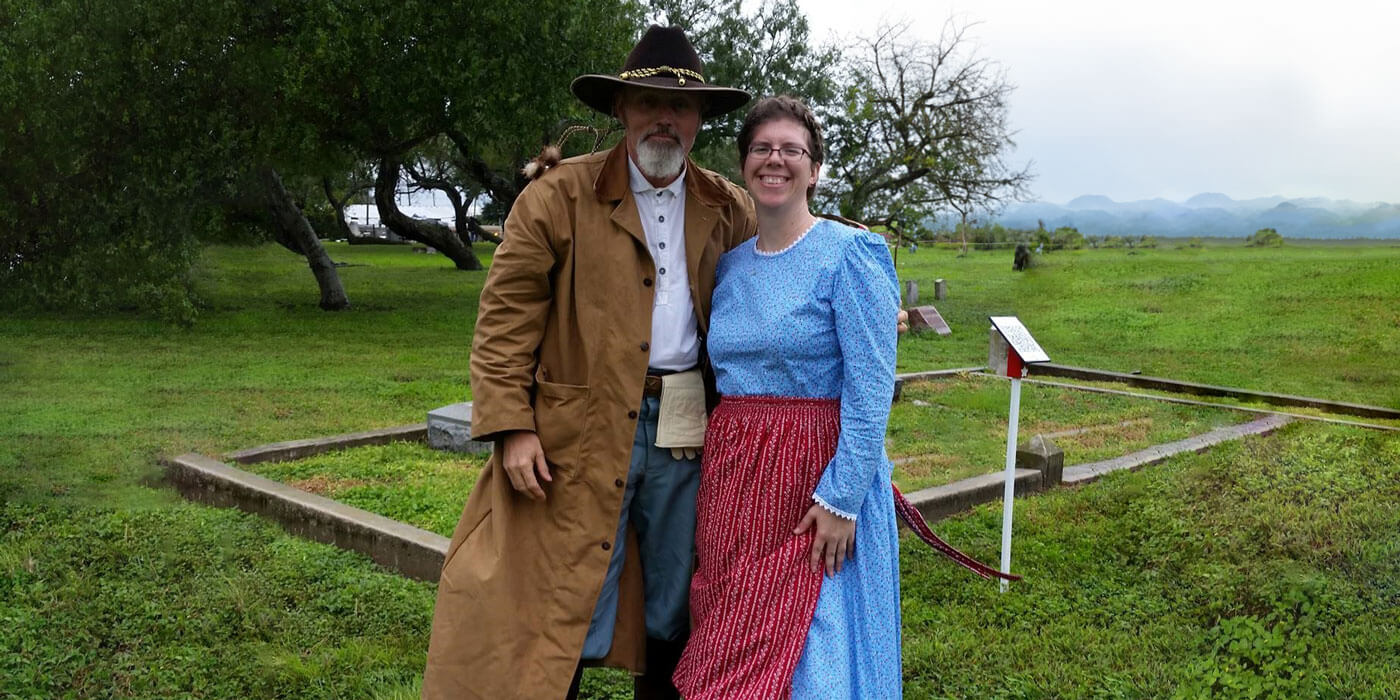
couple wearing pioneer clothing in field

Gender Roles and Family Dynamics

Family roles in LDS pioneer times were very reflective of the traditional families today. Fathers were expected to provide and preside over the family while women were mostly charged with raising and nurturing children. This meant that while fathers may have worked outside of the home, mothers took charge as homemakers and educators.

Pioneer Dress Is Practical & Functional

Pioneer clothing had to be made of material that was sturdy and durable enough for demanding household chores of prairie living, such as making meals and laundering clothing and bedding. Aprons were a common item in everyday clothing, heavy boots were worn that were functional through every season of the year.

However, some occasions such as parties, balls, and roundups would call for more festive wear. Women’s formal dresses weren’t dissimilar to everyday dresses but were made of finer materials and utilized bolder, darker colors. Patterns for these dresses were often traded amongst friends and found in catalogs.

Evolution of Pioneer Dress within LDS Communities

Naturally, as the garment industry evolved, so have renditions of LDS pioneer clothing. No longer is clothing made from the wearer ordering fabric and sewing dresses and trousers themselves. Now, machine-made fabrics are made with fewer imperfections and from more comfortable material.

While pioneer clothing is still regularly worn by FLDS church members, members of The Church of Jesus Christ of Latter-Day Saints rarely wear pioneer clothing anymore. However, few scenarios, such as pioneer trek reenactments or theatrical productions, may call for traditionally inspired pioneer dresses.
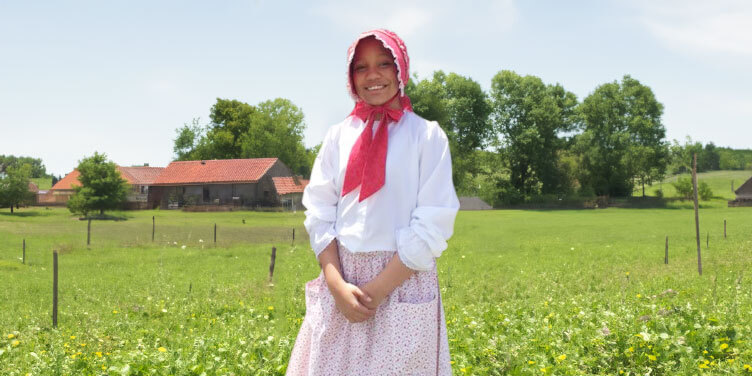
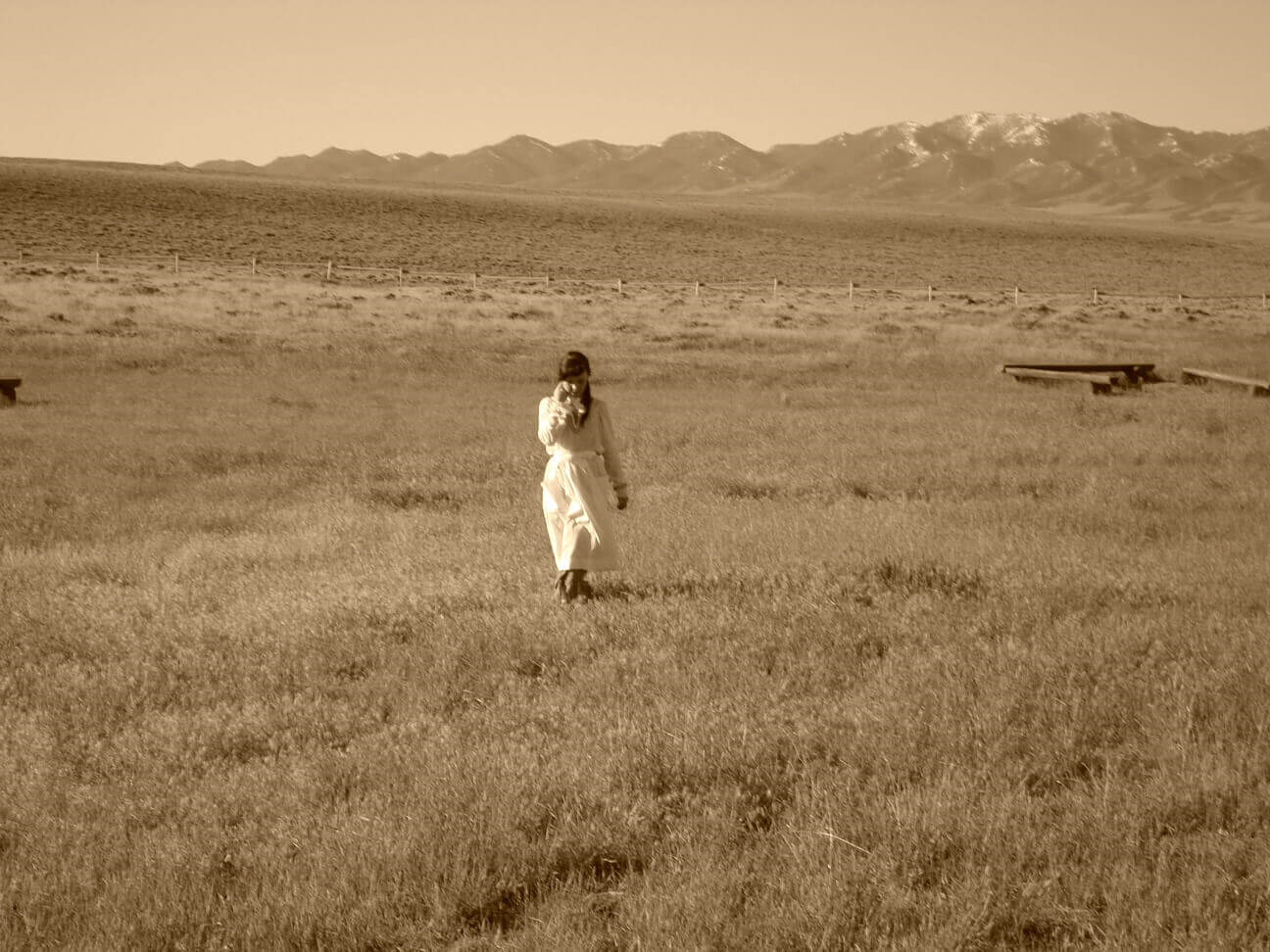
young woman wearing pioneer clothing on homestead

The Legacy Continues

The impact of pioneer clothing is still felt in LDS culture today, especially in the realm of modesty. Whereas most pioneers wore modest clothing for practical reasons, such as guarding themselves from the elements, LDS church members today wear modest clothing as a reflection of their spiritual commitment. They see their bodies as gifts from God, so they avoid extremes in dress and hairstyle.

Shop Pioneer Clothing at White Elegance

Do you want to rekindle your pioneer heritage and have a taste of what it feels like to be a pioneer woman? Explore our selection of pioneer dresses, costumes, and other pioneer clothing at White Elegance. We also have prairie costumes for occasions when you need to recreate that pioneer charm. We have several items to fit your tastes and reflect your brave ancestors who settled the Salt Lake Valley.
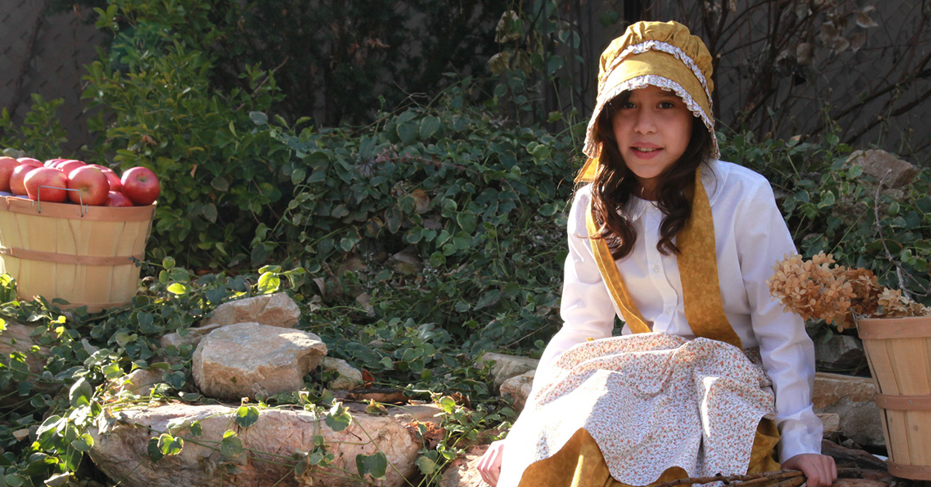
Are you planning to go on an LDS trek this year? If so, now is the time to prepare.

Pioneer treks provide an opportunity to travel back in time and experience the challenges pioneers faced in search of religious freedom during the 1800’s. The comforts of modern life are left behind during trek. Cars, cell phones, and modern homes are replaced with handcarts, hard work, and the great outdoors.

A large part of making the LDS trek experience authentic is through proper pioneer clothing. However, it can be difficult to find clothing that is both accurate and comfortable. Luckily for you, the experts at White Elegance have the perfect guide to buying pioneer clothes. Here are their top 5 things to consider when shopping for trek clothing.

Find Appropriate Clothing

Before you start shopping, it’s best to know exactly what you are expected to wear while on a pioneer trek. Women should wear a dress or skirt and top, an apron, bonnet, hiking boots, and a bandana during trek. Men should wear pants, a buttoned shirt, suspenders, boots, a hat and a bandana.

Modern clothing such as baseball caps, jeans, tank tops, and t-shirts are not allowed on trek. Appropriate clothing is not only intended to make you look like a pioneer, it’s to help you appreciate the challenges and sacrifices the pioneers faced.

Consider the Weather

Trek generally takes place during the summer, which means temperatures are likely to be high. Because of this, it’s best to choose clothing that will breathe and keep you cool. Avoid heavy, thick materials for your pioneer clothing. We recommend finding clothes that are 100% cotton or mostly cotton.

The sun is also a major concern for most treks. Sunburns and heatstroke are all too possible if you don’t take the proper precautions. Make sure you have a bonnet or a hat to cover your head. While it may seem counterintuitive to wear long sleeves during trek, they protect you from the sun much more than short sleeves.

Make Comfort a Priority

During your pioneer trek, you may walk up to 13 miles per day while pulling a handcart. Being comfortable isn’t just a recommendation, it’s a necessity. Ensure your comfort by choosing clothing that isn’t itchy, tight, or restricting. While the terrain on trek can be flat, it can also be rough terrain. Finding clothing that enables full mobility will make a big difference on your experience.

It’s also important to find proper footwear for the many miles you may walk while on trek. Opt for high-quality hiking boots and make sure to break them in well before trek. That way you’ll avoid the many woes of blistered feet.

Find Something Fun

Trek clothing should reflect the clothing the pioneers wore, but it shouldn’t be boring! Make sure to find clothing options that are appropriate but reflect your personality at the same time. We love these colorful options. Not only are they great for trek, the skirts and dresses can be worn at church and other activities later on.

Go for High-Quality

When it comes to LDS trek clothing, quality is much more important than quantity. The pioneers didn’t have an entire wardrobe to choose from while trekking across the plains. In fact, they often had to wear a single outfit all the way through. Follow in the pioneers’ footsteps by choosing one or two high-quality outfits to last the whole week.

Don’t cut corners when it comes to your trek clothing. It’s not just something you’ll wear for one week. You can use the clothes for years to come. From future pioneer treks to a variety of church activities, your pioneer clothing can be mixed and matched to fit many occasions.

Consider purchasing trek clothes rather than sewing your own. It will save you time, headaches, and may save more money than you think. Some fabrics are expensive and difficult to sew. Purchasing your own alleviates that risk altogether.

LDS Trek Clothing at White Elegance

If you’re looking for the perfect, highest-quality clothing for your pioneer trek, look no further than White Elegance. We have a large selection of everything from women’s dresses and bonnets to men’s hats and suspenders. Shop our pioneer trek clothing today to find items that will make your trek experience impactful, authentic, and spiritual.

Pioneer Trek season is upon us!  Are you wondering what you have gotten yourself into?  Here is a first person account from a Ma with experience.


Photo courtesy of M. FosterIn August of 1842 Joseph Smith prophesied, “The Saints will continue to suffer much affliction and will be driven to the Rocky Mountains.  Many will apostatize, others will be put to death by our persecutors or lose their lives in consequence of exposure or disease, and some [will live to] build cities and see the Saints become a mighty people in the midst of the Rocky Mountains” (Teachings of the Prophet Joseph Smith, sel. Joseph Fielding Smith, 1976, 255). Four years later, the pioneer exodus from Nauvoo, Illinois began.

My pioneer trek lasted a mere three days and left me sunburned, sore, and a bit more wise. I’d like to share my top two faith promoting experiences: pondering on the prairie, and the woman’s pull. 

PONDERING ON THE PRAIRIE

From the day we began our trek, as I pondered the experience I was having, two questions kept coming into my mind.  First, why did the pioneers have to suffer so terribly and face such tremendous obstacles?  Why couldn’t the storms have been calmed and the elements tempered to spare them from such agony?  And second, why, when the Willie and Martin companies discussed their late start did they decide to push on instead of wait?

James E. Faust answered my first question by stating, “These excruciating experiences developed in these pioneers an unshakable faith in God. I believe their lives were consecrated to a higher purpose through their suffering. Their love for the Savior was burned deep in their souls and into the souls of their children and their children’s children.”

President Hinckley added, “Our Father in Heaven allowed the handcart pioneers to suffer that we today might more clearly see our responsibilities.  A life that will inspire future generations is our responsibility.  As great things were expected of the early saints, so are they of us.”

Even those who passed through these trials understood the impact they would have on future generations.  Elizabeth Horrocks Jackson of the Martin Company wrote, “I have a desire to leave a record of those scenes and events thru which I have passed that my children may read what [we] were willing to suffer, and did suffer, patiently for the gospel’s sake.  I also desire them to know that it was in obedience to the commandments of the true and living God.   I hope, too, that it will inspire my posterity with fortitude to stand firm and faithful to the truth, and be willing to suffer and sacrifice all things they may be required to pass thru for the Kingdom of God’s sake.”

The answer to the second question I was pondering, why the Martin and Willie handcart companies decided to push on instead of wait, came during the solo experience at the close of our second day.  We were given the opportunity for some alone time, so I grabbed my journal and staked out the most comfortable piece of prairie I could find.

As I was writing about my day I kept feeling the strongest impressions regarding the concepts of Zion and gathering.  I came to understand that the motivation for all that the pioneers did came from a true conversion in the center of their souls.

They didn’t wait because they couldn’t wait. They were determined to gather to Zion at any cost. They were unwavering in their resolve to begin the actual physical gathering of covenant Israel to a location, designated by God, where they would build a temple and establish Zion.  They left comfortable homes, waded streams, crossed mountains and pulled through heavy sand to be where they would hear a prophet’s voice and live with the Saints of Zion. They came across the plains to live the gospel teachings and to build the kingdom of God.  The journey served to sharpen their religious focus. Their accomplishments were possible because they knew that our Heavenly Father and His Son, Jesus Christ, restored the gospel through the Prophet Joseph Smith and they could not WAIT to be a part of it!

My trek experience helped me to truly appreciate not just the pioneer legacy of faith and courage but to understand their legacy of conviction.

THE WOMAN’S PULLPhoto courtesy of M. Foster

Finally, is the experience of the woman’s pull.  This part of the trek is meant to represent the historical fact that men were often not part of a family’s trek west.  Some were taken away when the Mormon Battalion was formed, while others pulled handcarts up until the moment of their death, leaving their wives and daughters and sisters to carry on.  It was the women’s resourcefulness, efficiency, and steadfastness under inhumane conditions that pulled many families through.

There were many lessons learned on the woman’s pull, but I want to share the one that had the most impact on me.

My trek daughters and I were the second handcart to start up the hill.  After the inspiring message we received from our leaders my girls and I were repeating the mantra, “we can do this”.  I put my head down, focused on my feet, and stepped forward.

I thought about the quote by Russel M Nelson, “Truly the Lord encourages us to walk in faith to the edge of the light and beyond—into the unknown. After the trial of our faith, He once again shines the light ahead of us, and our journey of faith in every footstep continues.”

It wasn’t until I reached the base of the hill that I realized that the men and boys were reverently lining both sides of the trail.  A few steps later the girl on my right asked, “Why do they all have their hats off?”  My head had been down, so I hadn’t noticed…but she had.  I answered her question, “They have their hats off out of respect for you”.

I will never forget that moment as I looked up and saw all of those young men looking respectfully on.  In that instant I recognized the fact that the priesthood of God sustains me in every way, in every aspect of my life, every day of my life.  My faith and my testimony of the priesthood grew three sizes that day.

For me, the trail was a schoolhouse of faith and learning.  As a second-generation Mormon I don’t have a pioneer heritage, per se, but the lives of these amazing pioneers touched my heart and rekindled my passion for the Gospel of Jesus Christ.  For this, and for them, I will be eternally grateful.